


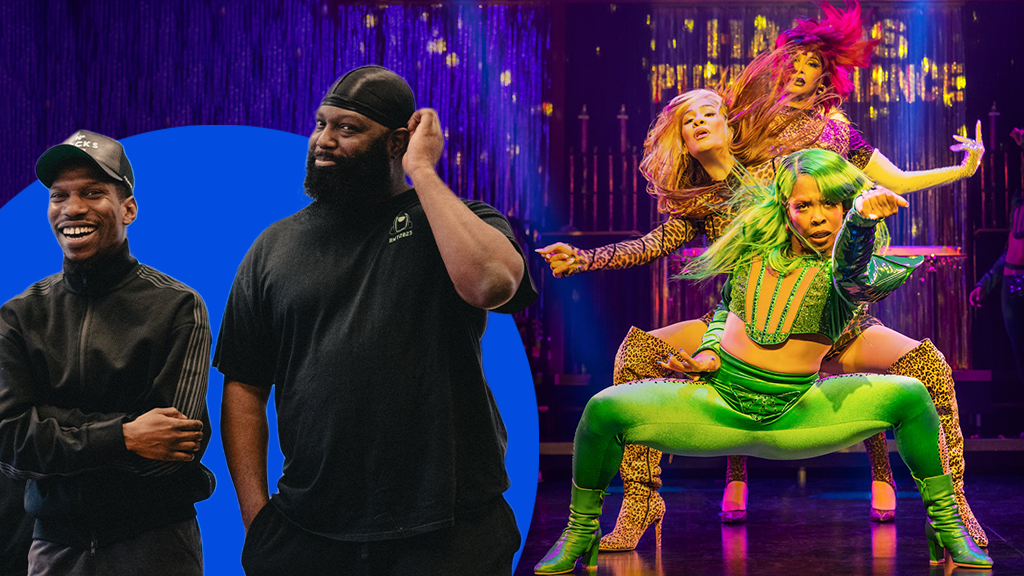
Category is: Jellicle Realness! More than four decades after it first became a worldwide theatrical sensation, CATS is back on Broadway. But like any cat with nine lives, Andrew Lloyd Webber’s beloved musical has been utterly transformed and reinvented as CATS: The Jellicle Ball.
Originally based on T.S. Eliot’s 1939 book of poetry, Old Possum’s Book of Practical Cats, the balletic mega-musical has always told a whimsical story, with feline hopefuls presenting themselves for a chance to ascend to a new life in the Heaviside Layer under the watchful eye of Old Deuteronomy.
However, in its latest iteration, Rum Tum Tugger and co. have been transported to the ballroom — the underground LGBTQ+ culture that has thrived in New York and other major cities since the drag balls of the mid-19th century. In more recent times, ballroom’s influence has been seen throughout popular culture, from the award-winning documentary Paris Is Burning to Madonna’s “Vogue” and even “RUNWAY,” Lady Gaga and Doechii’s new collaboration for The Devil Wears Prada 2.
For choreographers Omari Wiles and Arturo Lyons — both longtime fixtures in New York’s ballroom scene — the reinvention made perfect creative sense. “CATS was already a competition in a sense, right?” Wiles tells Ticketmaster from his Brooklyn apartment. “So therefore it was like, well ballroom is that. So why not center the entire show around a ball?”
After transferring from its acclaimed Off-Broadway run back in 2024, CATS: The Jellicle Ball is now playing at the Broadhurst Theatre. Anchored by Tony-winning Broadway legend André De Shields as Old Deuteronomy, the revival’s cast is filled with living ballroom legends like Junior LaBeija and “Tempress” Chastity Moore and a company of new faces not often used to seeing their lives as Black, Latinx, trans, nonbinary and queer performers reflected in the bright lights of the Great White Way.
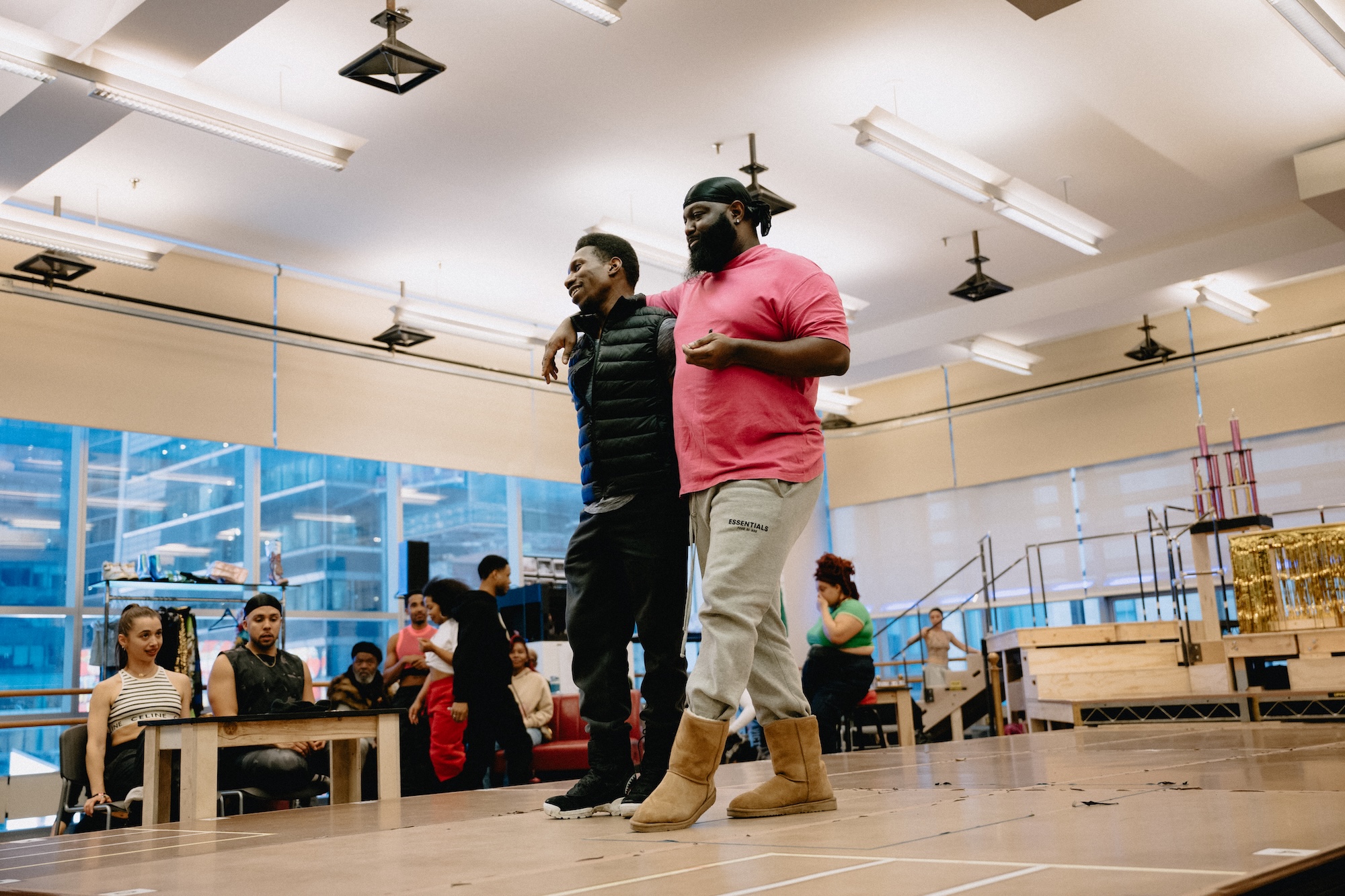
CATS: The Jellicle Ball also offers audiences a vital opportunity to experience the magic of ballroom, which in and of itself is often little-known or misunderstood outside of the LGBTQ+ communities it protects and champions.
“Ballroom is very selective on how it’s presented, if it’s presented the right way,” Lyons says. “Because a lot of people come and they take from it and don’t do it justice or give back. So we just needed to make sure that we were authentic and everything that we did for the show was 100 percent as perfect as it could be so the community is represented the right way.”
Below, Wiles and Lyons open up to Ticketmaster about the legacy of ballroom in films like Paris Is Burning, crafting the categories for The Jellicle Ball, why the show’s representation of the LGBTQ+ community matters so much and more. Plus, the pair dish exclusively to Ticketmaster about working with Madonna on her long-awaited album Confessions II and how they view their platform on Broadway as Black, queer choreographers.
Hello! It’s so nice to meet you both. Are we having a jellicle day?
Omari Wiles: [Laughs]
Arturo Lyons: I don’t if it’s jellicle…
Wiles: It’s a day.
Lyons: It’s more like jell-o…
Chances are, CATS: The Jellicle Ball could be many theatergoers’ first introduction into the world of ballroom. How would you explain ballroom culture to someone who’s never experienced it before?
Lyons: I always tell people to watch certain things, like, of course, Paris Is Burning and other documentaries like that. What’s the other one called?
Wiles: Yeah, the Kiki documentary, which focuses around the kiki scene?
Lyons: No, not that one. The other one that came out right after Paris Is Burning.
Wiles: Oh, How Do I Look?
Lyons: How Do I Look!
Wiles: It’s hard to find that one, though.
Lyons: No, I watched it recently! Like, this year. I think it was on a streaming service… but Paris Is Burning, How Do I Look, those kind of documentaries or shows. And then, because of OTA [the New York City-based Open To All Entertainment], frequently I tell them, if you want to go to a ball, that should be your first introduction because it’s very small and local. You can go once a week or every other week. I would tell them to do those things first, just so they can get accustomed to it.
Wiles: Yeah, acclimated with the world and how it works — authentically how it works.
Lyons: And see if it’s even for you!
Wiles: Everyone gets something out of ballroom — whether you become a competitor or a spectator — it really depends on how you take it in. To kind of sum it up, it’s like, “Welcome to a world of competition.” You know, different categories that we compete in that vary — from Fashion to Beauty Standards to Realness and how stealth you can be within society, or even the athleticism of the different performance categories.
How did the two of you first get involved as choreographers for CATS: The Jellicle Ball?
Wiles: It started with [co-director] Bill [Rauch] and with [dramaturg and gender consultant] Josie [Kearns]. We started conceptualizing the idea. Bill and Josie actually approached me first to come on as a ballroom consultant and just see if this idea could work — if these two worlds could exist and if CATS was the right story to be able to bring it all together.
Of course, centering around The Jellicle Ball was where we found the connection, and where we could see that this world could live. Because CATS was already a competition in a sense, right? So therefore it was like, well, ballroom is that. So why not center the entire show around a ball? You know, the one ball of the year where Old Deuteronomy comes and makes this jellicle choice to ascend one of the competitors of that evening out into society, out into the real world with the blessings and skills and confidence that they learned from ballroom.
Then, through workshopping and bringing Arturo and [co-director] Zhailon [Levingston] on, we all really worked together to shape up the categories and the stories of each character. And that is what brought life to The Jellicle Ball, is not just it being about a vogue competition, but really showcasing all of the categories that we possibly could about ballroom.
Possibly the first time in the long history of CATS, these characters are not actual anthropomorphic animals. Was it important to you to still incorporate some of that feline energy and movement into your choreography?
Lyons: I think naturally with the category Vogue Femme, you know, I don’t know if people realize but the femme actually means feminine. So I think they’re married equally without trying to feel like we need to move like cats. Because naturally, we move feminine in the category for ballroom anyway. We didn’t try to lick our hands or things like a cat would naturally do. Our movements were natural to us in ballroom, and they just happened to translate the same way.
Wiles: I feel like it wasn’t just about the movements, but it’s the characteristics that cats possess that [are] equal to what we possess in ballroom: the confidence, the sassiness, the kind of, like, secret agent kind of movement, you know? Like they’re stealthy, they’re balanced — it’s already there in the physicality of what a cat is and the characteristics that cats bring. I think that shared a commonality in what we do in ballroom and how we bring forth our characters onto the ballroom floor. So that felt really, really similar, like Arturo said, so we didn’t have to do much movement that needed to represent a cat specifically. But it all aligned.
You’re working with so many characters in the show and a lot of them get their own song. Did you approach creating choreography for each character in terms of different dance styles? How did you differentiate and give each character their moment?
Lyons: I think it goes by the type of muses that they are… it goes with the category and the characters and their types of music. That’s how we decided which would go to what.
Wiles: Yeah, like we knew a Rum Tum Tugger being [in the] Pretty Boy Realness [category], they couldn’t be a vogueing cat, right? We had to add some aspect of street dance or hip-hop into their vocabulary because it was a part of the Realness aspect of it. And Pretty Boy Realness, being a smooth dancer, that felt really natural and good to that character.
But someone like Bustopher Jones, whose song is really about body and taking in and consumption, we wanted to really change that narrative and make them body positive. So we wanted to make all the movements in [“Bustopher Jones”] be about different body types and how we represent them in ballroom and be celebrated. So it felt really good to already have a layout of what these categories were to these characters, and then we were able to make movement choices accordingly.
How many categories do you put on display in the show?
Wiles: Let’s break it down from the first category: you have Virgin Vogue, which is Emma [Sofia] playing Cassandra, right? Then you have Rum Tum Tugger, which is the Realness category, representing all the categories within Realness that we possibly could try to do. At least for the Male Figure Realnesses. Then we have Bustopher Jones, which is Body, representing Model’s Body, Luscious Body, Woman’s Body and Male Figure Body as well. From there, moving into Tag Team Performance, Mungojerrie and Rumpleteazer. Within The Jellicle Ball section, we do a little montage of categories, such as Up In Pumps; Arms Control; Hands Performance; Foot, Back and Eye; Shake That Ass; Bizarre and Old Way. Later on you have Macavity as the Best Dressed Labels villain, too. And Runway with Mistoffelees.
So I would say there’s at least close to 15 categories that we’re possibly showcasing within the ball. Which is spectacular. Normally you have a major ball that has… the minimum is maybe 30 categories, would you agree, Arturo? So for us to be able to showcase at least 15 out of 30 that we do have at a ball is magical itself.
Lyons: That’s our dream, yeah. In that timeframe, the two-and-a-half hours.
@catsjellicleball CATEGORY IS: Runway! 🐱
Which character was the most difficult to pin down in terms of choreography?
Wiles: Skimbleshanks for me. [“Skimbleshanks”], it’s such a big number. It’s such a long song and there’s so much space, we really had to figure out how to bring the competition within that as well, too. Skimbleshanks sings probably the most out of all the soloists, so it was really like, “Whoa! What are we gonna do?” And we made it into an Old Way/New Way category as well, too. Which, Old Way/New Way is one of the original forms of the dance in ballroom, so we really wanted to make sure that it was precise and it was clean and it was accurate. And finding the balance between the movement and the score, that was really difficult to master.
Lyons: You also made it a cultural thing, so there [were] so many different styles in that one piece. And I think mine would be Mungojerrie and Rumpleteazer. Because it’s so long and they dance and sing through the entire song. So just choreographing so they won’t be dead, but still making it exciting… it was hard because they could barely breathe.
Wiles: OK? Cats might have nine lives, and we were not trying to get rid of all of them. [Laughs]
Obviously, “Memory” is one the most iconic songs in the history of the modern musical theater canon. Is Grizabella’s big moment in The Jellicle Ball an old-school park and bark number?
Lyons: She definitely kind of gives that.
Wiles: Yeah, there was no need to put choreography to Grizabella’s songs, or all her moments, because her message was so much more impactful. Being able to just see her in her truth and really expressing emotion, more than choreography, I think that is what sells our Grizabella. Telling the story of a trans woman who comes from ballroom, stepped out of ballroom and into the real world and had some hardships. And then tried to come back into ballroom to find her family again. Like, there’s no need for choreography in that.
Especially for the time that we’re in right now in the world, with all the things that are going against trans lives, we needed people to see how human Grizabella is. And all the Grizabellas around the world are. So that was really important for us to just not touch that with choreography.
@catsjellicleball The memory lives again.
What’s it been like working with the legendary André De Shields?
Wiles: That man is…
Lyons: So f—ing funny.
Wiles: He’s extraordinary. It’s been a pleasure, honestly. He is full of information, he is full of life, love, experience. You always learn something from him, but you always get a laugh. He brings so much joy into whatever room he walks in and it’s been a blessing to just be able to be around him and see him enjoy this [experience]. I think the show has brought him much joy.
Lyons: Thinking of that, it reminds me: Junior [LaBeija] is really his yin and yang. Because Junior’s more serious, but has all the same qualities as André. They’re different personalities but they just match.
Ken Ard originated the role of Macavity in the original CATS. Now he’s playing DJ Griddlebone in this reimagining. Did you get the chance to pick his brain at all about the original production and bring any of that into The Jellicle Ball?
Lyons: We didn’t want it to feel like we were taking from it, so we didn’t pick his brain. We’ve seen the show back in the day, but we just wanted to feel like it was our version of it.
Wiles: I think with Ken, because [he was] not playing Macavity in this version, and was playing a whole new character — ’cause we didn’t have a DJ Griddlebone downtown — this was a whole new track for us too. So as choreographers, and I can speak for team direction, we had to build who Griddlebone was in this show from scratch.
So Griddlebone, although they are in the balcony in their DJ booth [for] the majority of the show, they hold so much power in the movement of the ball. Because they have to say, “DJ Griddlebone, pump the beat!” He has to start all the crashes and we had to make sure that the audience can see that visibly, that he is controlling the energy in the room with the music. So DJ Griddlebone is the orchestra, is the beat, is the heartbeat of the show.
The show also stars everyone from ballroom icons like Junior LaBeija and “Tempress” Chasity Moore to new faces from the ballroom world who are making their Broadway debuts. Why was it important to represent such a breadth of ballroom culture within the cast?
Lyons: Casting specifically did an amazing job with that. We wanted it to be as authentic as possible. Because you can teach people choreo, but you can’t teach them what it actually is to be inside the ballroom. They won’t ever understand that unless they’re a part of it. So the show works because it’s authentic.
Switching gears, both of you have worked with Madonna at different points in your careers. Do you have any hopes or expectations for Confessions II?
Lyons: I hope that [pauses] I’m working on it. And Omari’s right there with me.
Wiles: OK? That’s a true confession! [Laughs]
Any thoughts on her new single that kicked off the rollout, “I Feel So Free”?
Wiles: I got a glimpse of it and I do, I love it. She’s always reinventing herself, which speaks true to the show, right? We reinvented CATS. And I mean, honey, she’s a cat herself, she has many lives. She has lived! And keeps on living. I feel like Madonna herself is timeless, right? She’s now and forever. That’s really her story. That’s who she puts out there to the world all the time. Like, you’re gonna get a new Madonna every, you know, couple of years. And it feels good. I’m happy that she’s happy, I’m happy that she’s still out there doin’ her big ones. A lot of people can’t say that. A lot of artists can’t say that. And you can tell she’s just having a good time. She’s enjoying what she does. And her music tells you that, it showcases that.
On a more personal level, what does having this opportunity on Broadway — and the platform and visibility that comes with it — mean to each of you?
Lyons: It’s crazy because, you know, we live in it but it hasn’t still resonated yet that I’m doing this. Or what that actually means for what we’re doing. People tell us how impactful, how important it is, and then it takes so long for me to sit in it and realize it. Maybe not until a few years…When I work, I just… work. And don’t think about the importance of what we’re doing for the community. It’s about making sure it’s the best job that I can do.
Wiles: Yeah, it’s still very surreal. It’s unreal, like it’s not happening. Of course it’s a dream come true. Being two Black, queer choreographers on Broadway reimagining Lord Andrew Lloyd Webber’s, like, masterpiece? Yeah, this is like, “whoa, what’s happening? Is it really happening? Is it really us and we really do this?” And then seeing so many people all over the world happy about this production, it’s crazy. And I’m seriously saying all over the world ’cause ballroom is everywhere.
Lyons: It happened when I was in London, they kept coming over to me congratulating me about CATS!
Wiles: It feels like we are reaching people who never would think that this could be their stories on Broadway. Broadway might be only in New York, but it’s such a big platform for people around the world to come and have the opportunity to be on that stage. So, yeah, it hasn’t really hit hit yet, but little by little I feel like I’m seeing how important this show is to so many people. And again, just what we’re going through right now in our world, that’s impactful.
But on a personal note, I’ve shed some tears, I’ve been choked up. But I’m just really grateful for the opportunity to be able to celebrate a community that’s given me so much confidence and has saved my life. So it’s really a blessing. And to be able to work with Arturo, that’s someone I care about, I love so much. So to be able to be on this journey together with him, I really couldn’t ask for anything more. To be able to work with someone that you’re friends with, to be able to create a community and a work space that feels like we’re just having a good time, a good party? That feels very promising. That feels like this is the career that I’ve worked so hard to achieve.
Lyons: Both of us have been in ballroom for so long, probably combined over 30 years, that we knew we needed to do a service to our community as well. Because ballroom is very selective on how it’s presented, if it’s presented the right way. Because a lot of people come and they take from it and don’t do it justice or give back. So we just needed to make sure that we were authentic and everything that we did for the show was 100 percent as perfect as it could be so the community is represented the right way.
Wiles: It’s about showing the world who the community is. Like I said before: we are human. I think the last song that Old Deuteronomy sings, letting the world know like, “Hey, cats! We are human. We bleed. We cry. We go through the same emotions anyone else goes through.” It really makes people feel like, “OK I can understand not just the ballroom scene but I can understand the LGBTQ community more. I can see them more.” ‘Cause you know, we’ve gotten the good, we’ve gotten the bad. And a lot of times, we’re represented in the bad ways. And we wanted to make sure that they see the good, they see the truth, and they see how human we are.
CATS: The Jellicle Ball tickets are available on Ticketmaster.
Tags
You Might Like
Arts & Theatre
Broadway Ticket Deals: Current Discounts on Broadway Shows in NYC
Broadway is calling! For theater fans looking to experience the best of New York City’s legendary stages without paying full price, this is your destination ...
Arts & Theatre
A Few Good Shows: Best of Broadway in October 2026
The chill in the air and pumpkins on the stoops of brownstones across the city mean one thing: October has finally arrived in New York. The coziest — and spo...
Arts & Theatre
Todrick Hall on His Original Musical Midnight: “It’s A Dream Come True”
In the fall of 2025, Todrick Hall made a surprise announcement on his YouTube channel: he was creating his first original musical. “I’m about to embark on pe...