


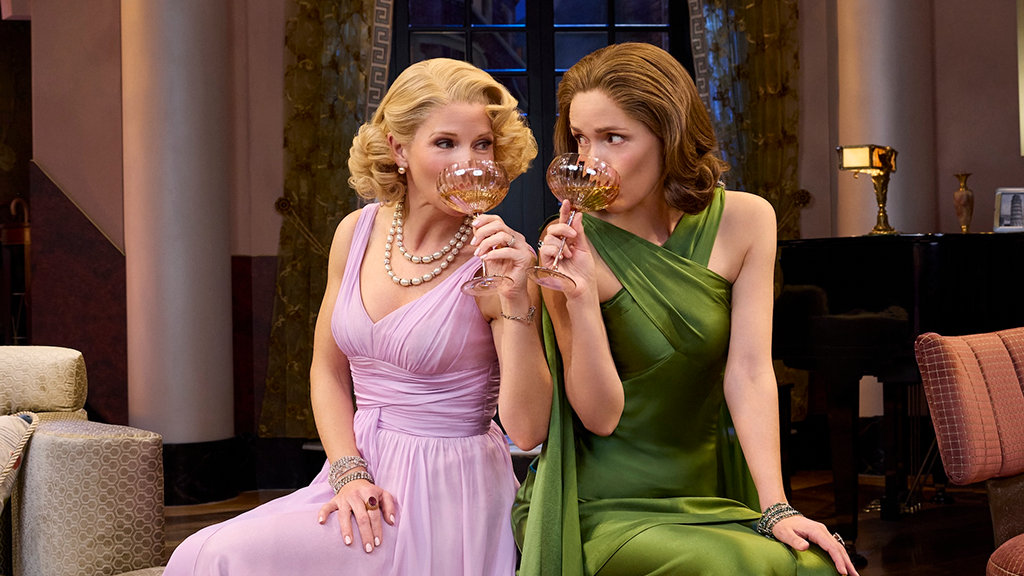
Kelli O’Hara is no stranger to the Tony Awards. After all, the Broadway superstar is among the most-nominated actors in Tonys history, with eight previous nods including a win for her starring turn as Anna in the 2015 revival of The King and I.
In fact, there seems to be little she can’t do with her famed soprano. In addition to that Rodgers and Hammerstein classic, O’Hara’s long resume on Broadway includes everything from her breakout role from two decades ago in The Light in the Piazza and Jason Robert Brown’s 2014 musical adaptation of The Bridges of Madison County to headlining big-budget revivals of The Pajama Game, South Pacific and Kiss Me, Kate. (And all of that’s not to mention dipping her toes into the worlds of TV, film and her original love, opera, in between gigs on the Great White Way.)
And yet, with her latest role in the revival of Noël Coward’s Fallen Angels, O’Hara is still managing to break new ground. With her total career nominations nearing the double digits, the actress has received her first-ever recognition from the American Theatre Wing and The Broadway League for her work in a play rather than a musical.
“Nobody had trusted me with a comedy,” the actress tells Ticketmaster a few days before the 79th Tony Awards. “Sopranos don’t get to be funny, by the way. They just don’t. I would’ve loved to have been more goofy in all my shows, but Anna in The King and I, it wasn’t called for, so…”
But this spring, O’Hara has finally been flexing her funny bone opposite fellow Tony nominee Rose Byrne in Coward’s madcap 1925 comedy. The farce, about two best friends behaving very badly with the same man, remains something of an underrated gem in the late playwright’s prolific oeuvre — largely due to the fact that it was deemed so inappropriate at the time of its premiere that the most senior office of the U.K.’s Royal Household censured the production and refused to allow it to be produced.
“Isn’t it amazing to think,” O’Hara says, “that two women admittedly having sex before marriage… just was so off-putting in 1925 that they banned it?”
O’Hara goes on to explain that only after making a few changes to Coward’s “scandalous dialogue,” was the show allowed to go on — but only because the Lord Chamberlain’s office deemed the plot “so ludicrous and so farcical — because it would never happen in the world, that two women would behave like this… isn’t that ridiculous? Which makes me so proud to do it.”
Coincidentally, Fallen Angels’ limited run happens to close on the same night as the Tony Awards (June 7). But O’Hara — who also stars in HBO’s The Gilded Age — remains nothing but grateful for the witty, wicked little comedy and ready to take on a new challenge.
“I just have to keep leaping and trust myself. Now, granted, it might not always go as well as [Fallen Angels],” she concedes. “I think it was one of those things where you’re like, ‘Maybe I could do it, let’s try!” And then not worrying so much if it would succeed, but just trying first… because I don’t want to stop learning.”
Below, O’Hara opens up to Ticketmaster about receiving her first Tony nomination for a play, finding a kindred spirit in co-star Rose Byrne, her life-changing role in The Light in the Piazza and why she might just chase a new dream as a jazz singer.
Congratulations on your Tony nomination for Fallen Angels!
Thank you, I’m so excited.
How did you find out?
My manager called me, in bed. I think I’ve always done it that way. Because if it happens, it’s like the most amazing thing and I burst into tears, but I don’t want to sit there and twiddle my thumbs and, like, bite my fingernails about it, you know? I just want to be proud of what I do. And so every time these Tuesday mornings come up — and it’s been a long time now — I just feel like, “I’ll let it be what it is.”
This is your first nomination for Best Performance by an Actress in a Leading Role in a Play. Does it feel any different from all the times you’ve been nominated for your work in musicals?
It does, somehow. Look, I mean, I love singing. It’s my first love, really, but I wanted so desperately to study acting. I went to acting school in New York and [wanted to] be an actor. And I was telling somebody this recently, I was doing a play this fall, the Tom Hanks play called This World of Tomorrow. And I had a very nice person after the show come up to me, and they said, “Oh, I’ve seen you in everything! But I didn’t know you were an actor!” And I think in that moment, it just dawned on me the way that we compartmentalize things, you know? Musicals are a very different genre, in a way. And yet, as I do this play, I don’t feel any differently than I did doing a musical. I don’t have to sing, but there’s just as much energy, just as much preparation, and maybe more. So to be recognized for a play, I guess in some way makes me feel… well, it just makes me feel very proud.
What drew you to Fallen Angels?
Scott Ellis, who directed me. Scott’s a very good friend of mine, and we’ve done many things together over the years. And [the Roundabout Theatre Company] does these wonderful galas in the fall, we did Kiss Me, Kate there. We did She Loves Me that way — I didn’t get to do the Broadway one because I was in The King and I. And then he said, “We’re gonna do the fall gala, and I want to do this play called Fallen Angels by Noël Coward.” Because the late Todd Haimes loved Noël Coward and wanted to do a play. He had passed, and Scott said, “In honor of Todd, I’d love to do a reading of this play just for a one-night thing.”
I read it, I thought a two female-led, two-hander kind of play: I’m there. I love it, it’s hysterical. And then he said, “I’m gonna try to get Rose Byrne to do the reading.” And I said, [sarcastically] “Yeah, good luck.” And then she said yes, I couldn’t believe it. And we did this really fast, read it at stands, you know, with the book, one-night celebration. And it was so much fun and so wacky that Scott came up to us at the party that night and said, “What do you think about doing a little short run of it?” And both of us just said, “Absolutely!” So it just took us a minute to find when we could, and here we are.
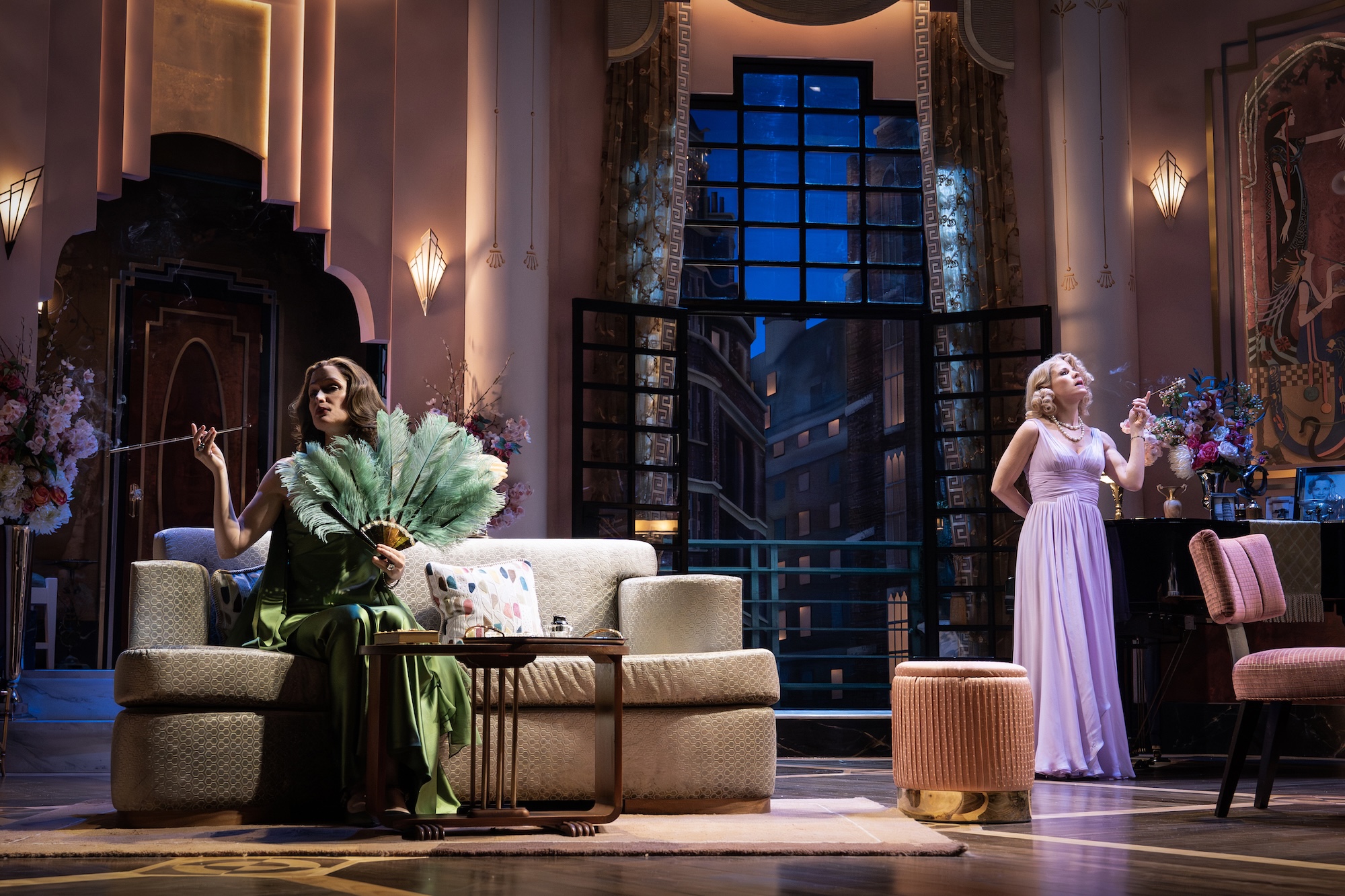
From what I understand, Fallen Angels has quite the scandalous history — it was even censored by the theatrical office of the U.K.’s Lord Chamberlain for its racy subject matter back when it premiered in the ‘20s?
You know, even today, watching it or listening, I’m sure people are just like [feigns clutching pearls], “Whaaat?” But isn’t it amazing to think that back in 1925 — and first of all, Noël Coward was 23 when he wrote it — that two women admittedly having sex before marriage and then being scandalous about the fact that he might be coming back to town, that they’re worried that they’re gonna ‘fall’ again, it just was so off-putting in 1925 that they banned it. They would not produce it, they would not let it go. And he made some changes to it, probably to lighten up a little bit of his scandalous dialogue, and then they deemed it, actually, so ludicrous and so farcical — because it would never happen in the world, that two women would behave like this — they let it be produced. Isn’t that ridiculous? Which makes me so proud to do it.
The two timelines may be a bit off, but I kept wondering what your character from The Gilded Age might think of Fallen Angels.
[Exclaims] Ah, Aurora! Well you know, we always give our characters so much more depth than what is maybe on the page. I always think of Aurora as someone who’s so curious that she crosses the street, she climbs that fence. In fact, I would’ve loved a followup storyline where — I won’t say anything, but I would’ve loved a really, really raunchy followup storyline to her divorce [in Season 3]. But you know, you can’t have everything. But yeah, I think something about her would’ve been very titillated by this whole thing. And who knows? Maybe there was something that she has never shared…
Tell me a little bit about Julia, your character in Fallen Angels. How would you describe her relationship with Rose Byrne’s character, Jane?
Rose and I like to say Julia’s a little bit the alpha. This is a friendship that’s been since they were eight and nine, respectively, and I was the [elder of the two]. So I always feel like maybe I bossed her around a little bit. She’s what Rose would call “off chops.” Which means she’s just a little bit frantic all the time, Jane is. So Julia is the one that’s a little bit more sturdy, a little more steady. However, when they hear that Maurice is coming back to town, they both lose it completely. I think Julia is very much a product of society. She thinks she’s living a very perfect life, she’s not really feeling her real feels most of the time. She’s living in a “tweedly-dee!” kind of atmosphere and this sort of opens and breaks all that up. That’s what I love about it, there’s this sort of piercing of a norm. And Julia, especially, needs it because she doesn’t feel much until now.
The show also received four other nominations, including Best Revival of a Play. What does that one mean to the company as a whole?
Listen, the Noël Coward estate was so generous with Scott to allow him to do it… it is so lovely to think that this play, which has never gotten its due — you know, it hasn’t been done in the States for 70-something years — that it’s being received in such a beautiful way. And I think all that should be attributed to Scott’s imagination and his desire to do this. I wanted to see him recognized with a Tony nomination. Because really, he was at the helm of all of this — the freedom in the room that he created for all of us just to play and try and throw things, and then to hone it.
But I love that Noël Coward is being [appreciated again]. They just did [Fallen Angels] in London as well, and then Christine Baranski’s gonna do Hay Fever in the fall. So I feel like he’s having a little resurgence here a hundred years after this particular one was written. And it’s really fun to kind of dive back into that, but to see how it lands now. Fun and almost, in some ways, a little scary — the fact that it can still resonate so much. You’d think that we’d all be just, like, bored by such closed-mindedness. And yet we’re all like, “No, that still stands.”
Jeff Mahshie’s costume design also received a nomination. How does the fashion of that era play into your character? You said she’s a bit of a product of society.
Yes, Jeff put me in pants, which is very strong. It gives the first [impression]. Even though I have this beautiful housecoat over it, I’ve definitely got my pants on and I’m wearing a pantsuit. It’s very sort of Katharine Hepburn-y. Jane is in a suit but a skirt. Those things say so much right at the top [of the show]. It goes the same for David Rockwell, who did our sets. You know, Scott made the decision to set these two women in a very sort of upper class London. Other times this play has been done, it’s done very middle class.
But we just felt like there’s this entitlement — not that you want to hate them for it, but there’s this expectation. You know, the men are going off to the club to play golf on the weekend… the whole play, to us, read ‘privilege.’ So you can become so melodramatic about a silly moment like this because there is this sort of crack in the facade of this entitlement and this privilege. And I think that’s a good way to start. So those clothes, Jeff’s taste is so high-quality. I’m wearing a pair of shoes that… I don’t even want to talk about how much they cost. [Laughs] And I’m falling down the stairs in them. So it’s this idea that you can take silks and satins and you can roll around on the floor because you’re cracking apart as a human being. And I think that’s one of the things that might help with making it funny: it’s this perfect facade, but we’re completely made fools of.
What’s it been like working with Rose Byrne?
She’s an absolute gem. I think we’re similar people in a way: we walked into the room
a year-and-a-half ago and just got to work. There wasn’t a lot of nervous time wasted on, “How do you feel? How do you feel?” It was like, “Are we in this together?” You know, it was like a high five and let’s go. And that night [of the gala reading], having had very little time together, we just trusted each other. I think both of us said yes to this [Broadway] run because of that. And that is how every single step has been. We don’t spend a lot of time overthinking it or worrying about each other. We know we’ve got it. She knows I got it, I know she’s got it. We can leap and catch each other. It’s the most un-dramatic thing I’ve ever been a part of. It’s so refreshing. She’s incredibly hard-working and just exactly what she seems to be, which is just good. She’s a good lot. I’ve adored this time. Yeah, I’m gonna miss her so much.
You’re both nominated for Best Performance by an Actress in a Leading Role in a Play. What does it mean for both of you to be recognized together?
You know, everyone would be fine and get by, but I think it would’ve been really, really hard and strange — for me, I’m just speaking for myself — to not be together. The show itself just feels like such a dual effort. I think we complement each other very well. But we’ve done this together step by step, neither of us taking from the other in any way. And so I didn’t expect… I thought, “Well there’s only five slots, that’s not gonna happen.” And I had prepared myself for quite the opposite thing. They didn’t separate us, they didn’t put us one into Leading and one into Featured. They just decided not to do that, I never asked. So I think that’s probably what made me burst into tears. I couldn’t believe that we both were recognized, it was the first thing I asked.
And to me, that’s sort of the end of it. Look, I’ve done this a few times. [Laughs] And there are years that feel more emotion-inducing and stress-inducing than others. There are definitely years I’ve walked into that awards show and been like [mimics smoking a cigarette], “Nothing’s gonna happen tonight!” Like, I’m just here having a good time. And then there are years, I’ll be honest, where you’re like, “I don’t know, could be!” and then you’re sort of nervous and emotional about it. This feels like one of these years [mimics cigarette again]. I feel we got really lucky to both be included — as a comedy, first of all — and with some hard-hitting performances this year. And I just feel like the gift has been given. It isn’t always that thing where people, or women especially, are pitted against each other. I can honestly say, and I can speak for her, I think, that it’s like, “Yeah, go for it. Whatever happens, happens.” We got this far, I think that’s all that matters.
Speaking of the many times you’ve been nominated, it has, crazily, been a bit over 20 years since your first Tony nomination in 2005 for The Light in the Piazza. How do you look back on that show and that time in your career now?
Oh my gosh. You know, there are moments when you can say, “Oh, like, I’ve worked so hard!” or “Oh I deserve…” No, I look back on that, especially, and I’m like, “Wow, am I lucky.” I don’t know if you know, I was doing Sweet Smell of Success, which was my first role, and it did not succeed. The show was not a success. And because it closed, I was randomly put in a workshop out in Sundance of this crazy arts piece called Children of Paradise, and they needed a placeholder in this other workshop called Light in the Piazza.
And just because I was a singer — like, one of the only singers left on the hill — they just put me in it. And I ended up basically finding my path for my life, you know, that kind of music, that kind of art form, that kind of musical theater. ‘Cause I was an opera kid in college. So when I think back on having been a part of that show for five years, playing Franca, playing Clara, workshopping it, I just think whatever divine intervention or luck of the draw or right place/right time happened for me, I am so, so lucky and thrilled. To this day, that score moves me like nothing else. And I just can’t believe that was me who was part of it. I can’t.
I didn’t realize that the show started at Sundance!
We did! We went out to Sundance in the summer of 2002, and it was half-written. There was no second act. There were a bunch of [vocalizes complex melody], no lyrics. Franca was not even written, I asked them to put the high notes in it ’cause I wanted to have an aria. At the time, all of that building of it was so much fun because [Adam Guettel] was just creating it. And just remembering all of that is crazy because I look at things now that I have no idea about, and I think, “That could be Light in the Piazza. You better put your heart into it.” When things are first created, and to have been there, it’s pretty magical, you know? I remember how the air felt and how it smelled and what I heard. I would walk down the hill from the cabins we were staying in, and I would have on my iPod [vocalizes another melody] because I was trying to learn it. And I was like, “What in the hell is this?” [Laughs] And how frustrated I was with having trouble learning it. And now it’s, like, in the canon.
In the last couple of years, you’ve managed to balance doing musicals, plays, television with The Gilded Age, and even returning to opera with The Hours at The Met. Is there anything on your bucket list that you still would like to conquer?
Well, I’m thinking about becoming a jazz singer. [Laughs] No, I was sitting in Birdland the other night because my son, he’s in high school but he’s an incredible pianist, and he made his debut with their school jazz band, and he was just, as Rose would say, “on chops.” I started crying, I couldn’t believe it. And I thought, “This is my new thing. My son and I are gonna make music together.” Just because I’m so inspired by his hard work and who he is.
So I’m half-joking, but it’s like, could I put together a set of jazz songs and he could play on some of them? Or come and guest on my concerts or something? So it’s sort of a real idea. ‘Cause I grew up on that kind of music, the Great American Songbook. Like, Ella [Fitzgerald] and all those people. I don’t care if I fall, I just want to keep leaping. Because I’m a person who… it’s not that I get bored. But I just want to scare myself, you know? Like even Fallen Angels, nobody had trusted me with a comedy. Sopranos don’t get to be funny, by the way. They just don’t. I would’ve loved to have been more goofy in all my shows, but Anna in The King and I, it wasn’t called for, so… but this has been so fun to leap and see if I can land on my feet. So really, I think I’ll know it when I see it. But I’m not kidding, maybe I’ll put together a little jazz show.
Having done this so many times, how do you prepare for the Tonys?
Well, I wish that I had more of an eye for fashion. I know what I like when I put it on, I know what I like when I see it, for sure. I trust my opinion on that. But I’ve gotten to where I really trust a team of helpers. So that actually takes a lot of the stress away from me for, like, “How will I look?” It will be putting that team of people together to help me feel my best. I think of it as sort of like an end of school year reunion, I get to see everybody. These last couple of weeks of seeing people, that makes me so happy. And like I said, I think of it, especially this year, as just a really fun time. And by the way, it will be closing night [of Fallen Angels]. So I’m probably going to be very, very relaxed and joyous. And it’s bittersweet to have the show end. But the prep is just about getting excited for it, really.
Considering the show will be closing the night of the Tonys, what will you take away from this experience?
That I just have to keep leaping and trust myself. Now, granted, it might not always go as well as… that’s the other thing: I can’t really worry about how it’s received. For instance, I never read anything about opera. I never would because I’ve never read any reviews. But look, I didn’t go back to The Met to think I was the best opera singer, by far. I know how lucky I am to have stepped through the doors. But it really was about pushing myself to be just this much better. You know, try to see if that’s still a part of me. And to be around people like Joyce [DiDonato] and Renée [Fleming].
So I think this play, this full-on physical comedy farce, which I had never done before — with the exception of a couple of scenes in Nice Work If You Can Get It — I think it was one of those things where you’re like, “Maybe I could do it, let’s try!” And then not worrying so much if it would succeed, but just trying first. And so it makes me feel like searching my mind for what that next leap would be and going for it instead of saying, “I don’t know, I’m gonna leave that over there.” Because I don’t want to stop learning.
Tags
You Might Like
Arts & Theatre
Step Inside Lunt-Fontanne Theatre, The Holiday Home of Blue Man Group
Update (October 22): This article has been updated with the latest info about the Lunt-Fontanne Theatre. The Lunt-Fontanne Theatre opened in 1910 as the Glob...
Arts & Theatre
Much Ado About Nothing’s Mason Alexander Park Shares Pre-Show Playlist
Mason Alexander Park will always associate Shakespeare with Coldplay. After all, the actor’s time spent in London starring in the new revival of Much Ado Abo...
Arts & Theatre
Broadway Ticket Deals: Current Discounts on Broadway Shows in NYC
Broadway is calling! For theater fans looking to experience the best of New York City’s legendary stages without paying full price, this is your destination ...