


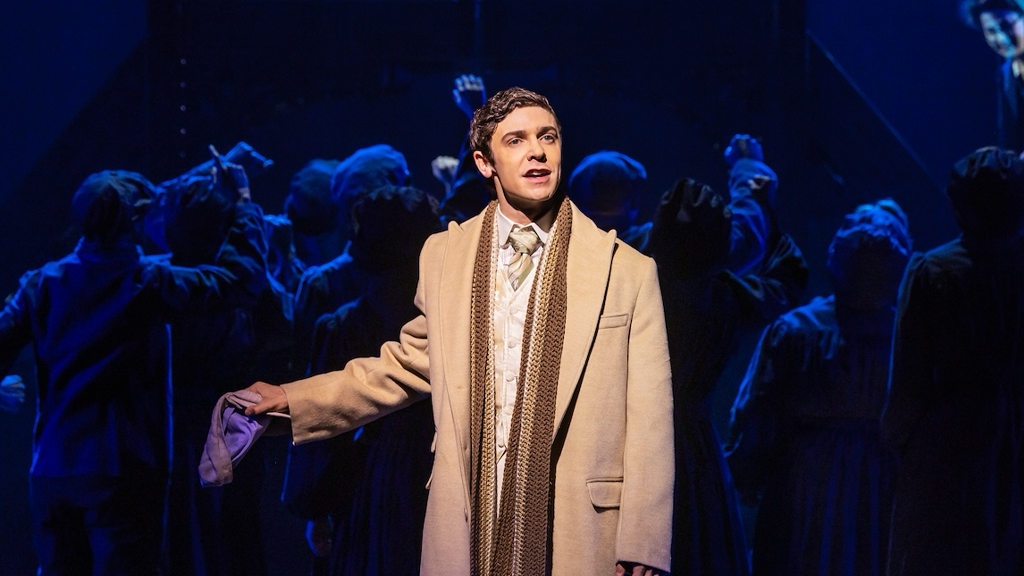
Ben Levi Ross knows how to ignite the Broadway stage. After all, the actor first made a name for himself playing the titular role in Dear Evan Hansen — initially understudying original star Ben Platt before headlining the show’s first national tour and eventually returning to New York to step back into Evan’s shoes on Broadway
Now, Ross has nabbed his first-ever Tony nomination for his role as Mother’s Younger Brother in the star-studded revival of Ragtime, now playing at the Vivian Beaumont Theater as part of Lincoln Center Theater’s celebratory 40th anniversary season.
“It’s like my wildest dreams come true,” Ross tells Ticketmaster of seeing his name among the nominees for Best Performance by a Featured Actor in a Musical. “The validation from the community I’ve been working in for the better part of a decade almost is what feels so special to me.”
And the actor’s nomination is just one of many for Ragtime’s first retelling on Broadway in nearly two decades. All in all, the musical earned 11 nominations in total, including Best Revival of a Musical and fellow acting nominations for Ross’ costars Joshua Henry, Caissie Levy, Brandon Uranowitz and Nichelle Lewis.
Based on E.L. Doctorow’s 1975 novel of the same name, Ragtime is set against the changing tides of turn-of-the-century New York and follows three disparate communities — the blueblooded upper class of New Rochelle, New York; Harlem’s vibrant Black community and a group of hopeful Eastern European immigrants newly arrived on U.S. soil — as they grapple with opportunity, injustice and the realities of the American Dream.
A self-described “genius at explosives,” Ross’ Younger Brother is a privileged member of the New Rochelle set, a wealthy, white family who wile away their carefree days unbothered (and largely ignorant of) the lives and struggles of Americans of a different skin color, birthplace or creed.
However, not everything is quite so serene beneath the picturesque facade of Younger Brother’s gilded life. “I think that he wants some kind of freedom that he’s not getting,” Ross surmises. “He doesn’t recognize it as privilege — but there is something about the confines of his familiar structure…I play him at the top of the show as a bit of a social outcast. Because I believe that’s sort of part of why he can’t really get on his feet on his own.”
That internal struggle ultimately puts Ross’ character on a dangerous path to break away from his family and change the course of his life, setting him on a collision course with vaudeville star Evelyn Nesbit, political anarchist Emma Goldman and an explosive date with destiny inside The Morgan Library.
Below, Ross opens up to Ticketmaster about the runaway success of Lincoln Center Theater’s Ragtime, his reaction to his Tony nomination, the powerful lessons audiences can take away from Younger Brother’s search for meaning and more.
Congratulations on your Tony nomination! How did you find out?
Thank you so much. I watched [the nominations] live because I was like, “Well, this is the first time that I’ve been even eligible for a Tony nom, so let me just, like, experience everything from beginning to end.” And I was by myself ’cause either way it went, I was like, “Let me just at least watch the whole thing.” So I was alone and then, like, the second that my name was announced, my mom called me. And she was also watching it live from California… like, at 6:00 a.m. or whenever it was.
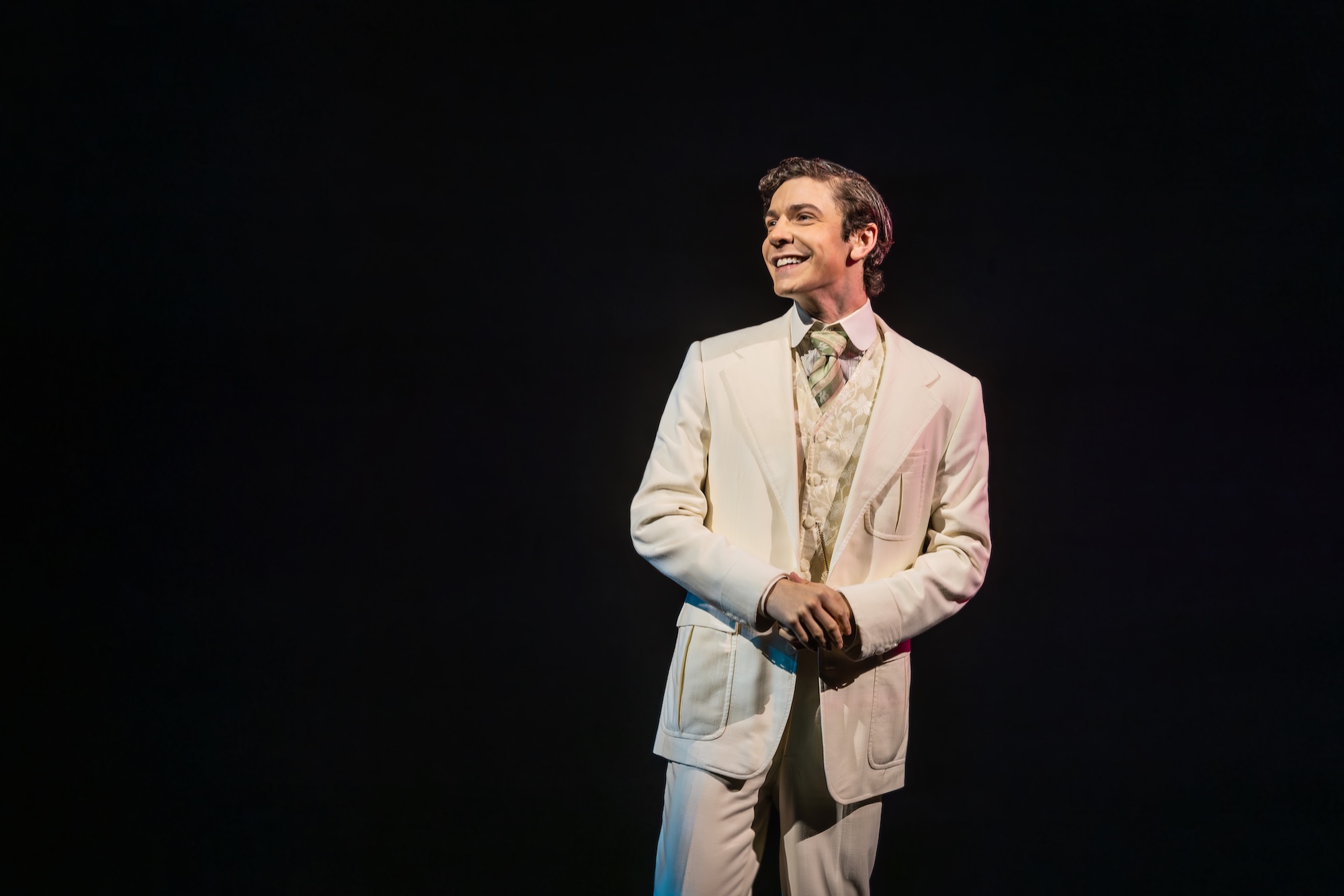
Now that you’ve had a little bit of time to process the news, what does your Tony nomination mean to you?
I mean, it’s like my wildest dreams come true. I was never, like, super obsessed with awards necessarily — it’s more that the validation from the community I’ve been working in for the better part of a decade almost is what feels so special to me. I love this community so much. I love theater; I love good musical theater. And so to be recognized in a show that I love, amongst a cast of brilliant people, and all of us that were sort of gunning for a nom got what we wanted, was really special. And the last couple of weeks have been really wild. It’s just been a whirlwind, meeting all of the other nominees from the other shows. I’ve always seen so many of these events that I’ve been going to from a distance over the last few years, and so now to be in it feels kind of out-of-body sometimes.
The show also received 10 other nominations, including Best Revival of a Musical. How do you feel about all of Ragtime’s nominations as a whole?
God, how do I feel about it? I know what it feels like to do the show with these people every night. And I’ve done a good amount of theater, so I recognized that what we had was quite special. But to get, once again, that sort of outward validation, it almost reminds me of how it felt back at opening. ‘Cause we’ve been doing the show for so long, but after opening, we got such a warm reception from the reviewers and just the audiences in general. And then, you know, you just get into the monotonous life of doing a show eight times a week.
Not to say that it ever became something I didn’t like doing, but it definitely gets to a place of, like, “OK, this is just normal life,” and you sort of forget people are actually out there witnessing it and seeing it [for the first time]. And then when awards season came around for us, it was like, “Oh, right! We have this special thing that we’ve been doing every single night.”
This cast is so stacked — your nomination alone is one of five from the show in the acting categories. You said it’s sort of normal life now, but what’s it been like working in this cast of such powerhouse performers?
I guess it’s been at once, deeply intimidating and inspiring and at the same time, incredibly easy because everyone is a really good person, too. There are no divas, to be honest. There’s not a diva in the cast, it’s all just people who love doing this show. And obviously there are the main principals, but it’s such an ensemble show. Like, we’re switching between these three groups of people for three hours. So everyone gets a lot of time offstage, you have a lot of time to reach out and go to someone’s dressing room if need be in the middle of a show. But like, Caissie [Levy], Brandon [Uranowitz], Josh [Henry], Nichelle [Lewis], Shaina [Taub], those are my people for life now.
I’d love to explore your character arc in the show. At the start of the show, how do you feel Mother’s Younger Brother fits into his family and the larger community of New Rochelle?
Well, at the start of the show, he is working for [Father], his brother-in-law, in the family business. But right from the get, there’s definitely tension. I think that Younger Brother doesn’t necessarily represent the kind of man that is, like, the “ideal man” of the turn of the century. He kind of represents a masculinity that will diverge in the coming years from what Father believes to be the correct way to be a man. So he is chasing after Evelyn Nesbit, he is looking for something to believe in, and then he finds himself at an Emma Goldman rally…
That’s a really fascinating point about his divergence from traditional masculinity. From that perspective, what do you think he wants in terms of the American Dream?
It’s interesting, I think that he wants some kind of freedom that he’s not getting. There’s something about the confines of his privilege that — I mean, he doesn’t recognize it as privilege — but there is something about the confines of his familiar structure. He doesn’t have a girlfriend. He doesn’t have a wife. He doesn’t have a family. So I would think that at the start of the show, that is sort of what he’s looking for. He’s looking to maybe not be living with his sister anymore, that’s what I believe. He’s one of those guys that in 2026 is, like… he’s gotten a lot of help from his family. And he’s just been at home. So I think that there’s a restlessness and a listlessness to his existence at the top of the show.
In terms of the American Dream, I mean… he technically is, like, the archetype of the person who would be able to achieve it in all of its glory. So if he wanted to go out and get it, he could. But he has a hard time with that. Which, to me, informed why I play him at the top of the show as a bit of a social outcast. Because I believe that’s sort of part of why he can’t really get on his feet on his own.
One of the things I find most interesting about Younger Brother is that he provides some of those really important bridges to real-life historical figures in the story like Evelyn Nesbit and Emma Goldman. I was wondering if you had any thoughts on the dichotomy of his relationships with those two women and how he’s affected by crossing paths with each of them.
Well, first of all, I would love to hear what you think is interesting about it, because it’s the first time, as you’re saying that, that I’m sort of realizing that I treat those women differently in the show. But he does! He does treat those women differently.
Evelyn Nesbit is a hyper-sexualized pop icon of the early 1900s, and so there is violence that comes out of him when she rejects him for a second. And I wanted to walk that line of, like, over-sexualizing and idolizing a woman versus the second that she rejects you, it becoming quite violent. Because we see that time and time again.
Whereas Emma Goldman, he’s not sexualizing her, to be honest. Like, there’s no sexual tension there. He sees her as… he doesn’t really see her gender, almost. It’s just the words that she’s speaking, the fire that she’s igniting, the anger that she’s tapping into in him. And the anger that she’s tapping into in the general public when she’s calling for a strike is what lights that fire in him. And the funny thing is, I don’t even know if he and Emma Goldman ever actually interact. He just sees her from a distance. And for the rest of the show, she’s in his mind.
As you mentioned, Younger Brother’s entire trajectory changes during “The Night That Goldman Spoke at Union Square.” Did you do any research on that event?
That’s the interesting thing about Ragtime, is that there are these historical events. But [only] to a degree, because it’s then mixed in with this fictional story. Like, [the standoff at] The Morgan Library, for example, that never happened. It is helpful, obviously, to read some of Emma’s writing. But in terms of the arc of the show, I just have to live in this specific world of Ragtime. And, you know, reading the novel of Ragtime between City Center and doing Broadway was helpful, even though it is quite different — especially for Younger Brother. But this world that is created, it’s historical fiction. So it’s not super helpful for me to in my head be like, “Well this thing did happen and this thing didn’t happen.” Because it’s like, this all just has to be true and real for me.
That makes sense. And then leading up to the climax of the story, “He Wanted to Say” really explores this idea of Younger Brother “waking up to America.” What do you think that song has to say about activism, inciting social change and using privilege to be an ally to marginalized communities?
I think something that I also really wanted audiences to leave with with my interpretation of this part is that he’s definitely not a perfect ally. He’s not a perfect ally by any means. And what I mean by that is, there is a messiness to what he’s doing at the top of his, sort of, “activist journey.” And there definitely is ego and some self-serving reasons for why he does what he does. I don’t believe that the only reason that he leaves his family is because of Sarah’s death. I also believe that he wanted a reason to leave his family, you know what I mean? I do believe that this person just wanted to throw himself into something.
That’s not to say that it also, at its core, is not coming from a place of great empathy and of great anger, and that he hasn’t been awoken to these injustices that he’s seen right before his eyes. That is true. And that’s what’s said in “He Wanted To Say”: “I would shed this skin if I could to stand with you and fight.” There’s a real truth and a real authenticity to that. That is what he feels.
But I also find it really interesting that at the end, when he says, “I know how to blow things up,” that’s all that he ends up saying. All of those words that he wanted to say to [Coalhouse] weren’t actually the thing that would ever lead to actual action. Like, it’s the thing that actually leads to something physically happening that he says. And that’s all they need. And I kind of think anyone that considers themself an activist could take a note from that. There’s a lot of talk and there’s a lot of words that are said, there’s a lot of academic language that people are loving to use and [sharing] infographics on Instagram. But that without action is nothing.
Sometimes you just have to blow things up.
I mean, boom. Don’t quote me on that but, you know… [laughs]
What’s one thing you’ve learned from doing Ragtime that you’ll take with you into the rest of your career?
So many things. But I was talking recently to my partner about how, with every show I’ve done, I’ve learned a physical thing that I’ve taken with me in terms of applying it to the next show. Like with Dear Evan Hansen, for example, it was that I could do B-show versions of the show when I wasn’t feeling 100 percent, but it was still impactful.
In this show, I’ve really deepened the mind-body connection with my voice. ‘Cause Younger Brother has this rage in him, and as you see at the top of Act II in the fight scene with Father, I use my voice in kind of violent ways in this show. And there’s a lot of times where I think that I can’t do it or I’m like, “Oh my gosh, my voice is gonna be so tired, my body’s gonna be so tired the next day.” But it’s wild how much your mind plays into that. Because there are certain mantras that you can tell yourself, like, “Voice like butter, voice like butter, voice like butter,” and then slowly everything loosens and you find relief. And you find range again. And that has been my journey, physically, with this show thus far. I know that that’s not something I’ve learned from, like, the story of Ragtime, but it is the thing that I as an artist find really interesting and rewarding about doing a show for so long. I feel like I am constantly learning new things about my body as an instrument.
Any hints at what we can expect from you at the Tonys? Have you started thinking about what you’ll wear?
Oh my gosh, well actually, right after this, I’m having my first call with a stylist. So I actually don’t know what I’m wearing just yet. But it’ll be cute! Somethin’ cute. Something cute and fun for the girls!
Tags
You Might Like
Arts & Theatre
Broadway Ticket Deals: Current Discounts on Broadway Shows in NYC
Broadway is calling! For theater fans looking to experience the best of New York City’s legendary stages without paying full price, this is your destination ...
Arts & Theatre
Todrick Hall on His Original Musical Midnight: “It’s A Dream Come True”
In the fall of 2025, Todrick Hall made a surprise announcement on his YouTube channel: he was creating his first original musical. “I’m about to embark on pe...
Arts & Theatre
6 Broadway Shows to See This Fall in NYC
Ask any native New Yorker and they’ll tell you: Fall is the perfect time of year in the Big Apple. The leaves changing in Central Park, the weather cooling f...